Fortinet vs Sophos ფაიერვოლი for Business Networks
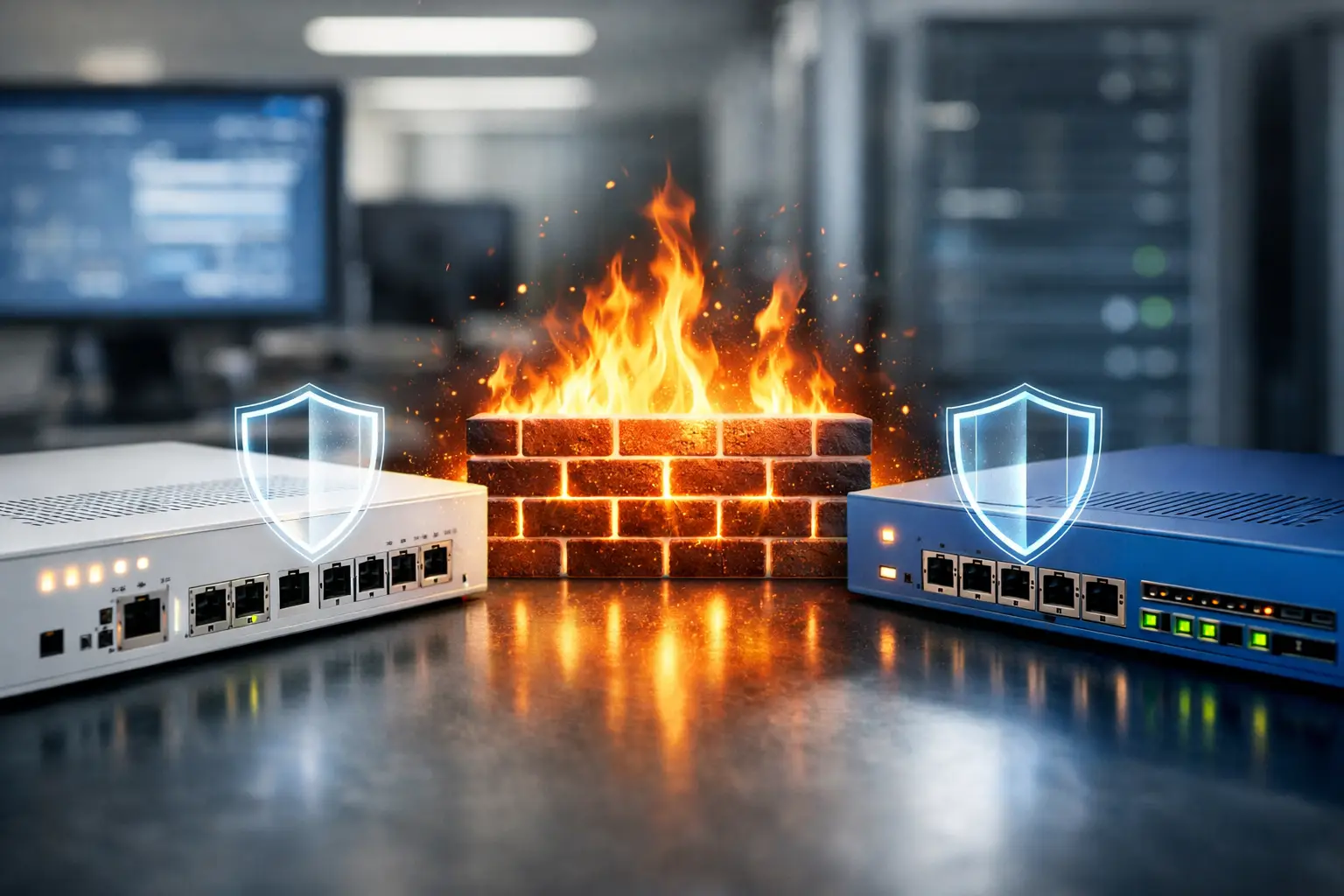
A search for fortinet vs sophos ფაიერვოლი usually begins when a business is replacing an aging gateway, opening a new site, or standardizing security across multiple offices. Both brands are established choices for next-generation firewall deployments, but they approach network protection differently. The better purchase is not simply the one with the lower appliance price. It is the platform that matches your traffic profile, internal IT skills, licensing plan, and growth targets.
For procurement teams, the decision also affects recurring costs, support renewals, replacement schedules, and how easily new appliances can be added later. Fortinet and Sophos can both protect users, applications, servers, branch offices, and remote connections. Their strongest use cases are not identical.
Fortinet vs Sophos ფაიერვოლი: the practical difference
Fortinet firewalls, led by the FortiGate product line, are frequently selected for organizations that need high throughput, broad deployment flexibility, and detailed network control. FortiGate appliances are used from small offices to data centers and large distributed environments. The platform is particularly familiar to network teams that manage VLANs, dynamic routing, site-to-site VPNs, SD-WAN, segmentation, and high-volume internet traffic.
Sophos Firewall is often attractive to organizations that want a security-focused interface and close coordination between endpoint and network security. Sophos Central provides cloud-based management for compatible Sophos products, and its synchronized security approach can share endpoint health information with the firewall. For a company already using Sophos endpoint protection, that integration can simplify incident response and policy decisions.
Neither approach is automatically better. A network-heavy environment with several branches and demanding throughput requirements may favor Fortinet. A business with a lean IT team and an existing Sophos endpoint estate may gain more immediate operational value from Sophos.
Performance and hardware selection
Do not compare firewall models only by the maximum firewall throughput shown on a specification sheet. Basic firewall throughput is measured under conditions that do not reflect every enabled service. Once SSL inspection, intrusion prevention, antivirus scanning, web filtering, application control, and VPN traffic are active, usable performance changes.
Fortinet has a major advantage in its use of purpose-built security processors in many FortiGate models. These processors are designed to accelerate security functions and are a relevant consideration for organizations with large internet connections, high session counts, or strict latency requirements. This makes FortiGate a common choice for locations where the firewall must do more than basic filtering.
Sophos offers appliance options across small, mid-market, and enterprise requirements, including desktop and rackmount models. Correct sizing remains essential. A small appliance that handles basic office traffic comfortably may become a bottleneck when the organization enables full TLS inspection, connects more remote users, or adds cloud applications.
When requesting a quote, provide the actual technical baseline: internet bandwidth, number of users, expected concurrent VPN users, number of sites, required ports, PoE requirements if applicable, and whether high availability is required. Also state which security services will be enabled from day one. This information produces a more useful recommendation than selecting a model by user count alone.
Security services and policy control
Both vendors provide the core next-generation firewall functions businesses expect: stateful inspection, application awareness, IPS, malware protection, web filtering, VPN, traffic shaping, reporting, and segmentation. The difference is often how policies are organized and how the security stack fits with the rest of the environment.
FortiGate policies can be highly granular. This is valuable when administrators need to control traffic among multiple departments, server networks, guest Wi-Fi, industrial devices, cameras, or branch locations. Fortinet also has a broad ecosystem that includes switches, wireless access points, endpoint products, analyzers, and centralized management tools. For companies planning a security fabric built around one vendor, that breadth matters.
Sophos places strong emphasis on ease of security administration and endpoint-aware protection. If an endpoint is compromised or out of compliance, Sophos can use that context to help isolate or restrict the device at the firewall level. This can reduce response time for common endpoint-led threats, especially where one IT team is responsible for both user devices and network security.
The trade-off is administrative preference and technical depth. Experienced network engineers may prefer Fortinet’s flexibility for complex routing and security architecture. Teams that prioritize clear visibility into users and endpoint health may find Sophos faster to operate for daily tasks.
Management for one site or many
A firewall is not a one-time hardware purchase. It requires updates, policy reviews, monitoring, backups, and periodic firmware planning. Management capability should therefore be evaluated before selecting the platform.
Fortinet offers several management paths, including local administration, centralized management, logging, analytics, and cloud options. This is useful for enterprises, managed service providers, and organizations with many branch sites. It also supports detailed operational workflows, although advanced deployments may require administrators with stronger Fortinet knowledge.
Sophos Central is a practical option for organizations that prefer cloud-managed visibility across firewalls and endpoints. It can be particularly convenient for a company with limited on-premises management infrastructure or several smaller locations. The trade-off is that teams with highly customized network designs should confirm that the available management model supports their reporting, retention, delegation, and change-control needs.
For either platform, plan for configuration backups, role-based administrator accounts, log retention, alert routing, and a tested procedure for firmware upgrades. These operational details protect the investment long after the initial installation.
Licensing, support, and total cost
The appliance price is only one part of the budget. Subscription bundles determine access to many security services, while support plans affect replacement coverage, software updates, and access to technical assistance. Fortinet commonly packages services through FortiGuard and FortiCare options. Sophos offers subscription and support packages that vary by appliance and required protection level.
Compare quotes using the same term length and the same security scope. A three-year or five-year package may offer more predictable costs than annual renewals, but only if the selected appliance has enough capacity for that entire period. A low entry price can become expensive when the hardware must be replaced early because encrypted traffic inspection or remote access demand was underestimated.
Also consider deployment costs. If your team has Fortinet certification, existing FortiManager workflows, or FortiSwitch infrastructure, staying with Fortinet can reduce training and migration effort. If Sophos Endpoint is already deployed across the organization, Sophos may reduce operational friction and improve the value of tools already in use.
Which firewall fits common business scenarios?
A FortiGate is often the stronger fit for a growing company with multiple branches, advanced routing requirements, significant VPN traffic, or a need to consolidate firewall, SD-WAN, switching, and wireless management. It is also a strong candidate where high security inspection performance is a purchasing priority.
A Sophos Firewall is often a sensible fit for small and mid-sized organizations that want centralized cloud management and already rely on Sophos endpoint protection. The endpoint-firewall relationship can make policy enforcement and device isolation more straightforward for a smaller security team.
For a single office with basic internet protection needs, either brand can be effective when sized and licensed correctly. In this situation, local availability, warranty terms, support coverage, existing technical skills, and the number of protected devices may matter more than advanced feature comparisons.
Questions to answer before ordering
Before selecting a model, confirm your required internet speed with security inspection enabled, expected growth over the next three to five years, number of remote users, WAN and LAN port requirements, and whether redundant power or high availability is necessary. Identify integrations with switches, wireless access points, endpoint security, directory services, and logging platforms.
Ask for a quote that clearly separates appliance hardware, subscription services, support, accessories, and deployment requirements. This avoids comparing incomplete offers and gives procurement teams a realistic total cost of ownership. GreenCode Tech can help source Fortinet or Sophos equipment and align the order with the required model, license term, and infrastructure scope.
The right firewall should give your team enough capacity to enable the protections it needs, not force administrators to turn services off to preserve performance. Start with the traffic and operational requirements, then purchase the platform that your organization can manage confidently for years.