

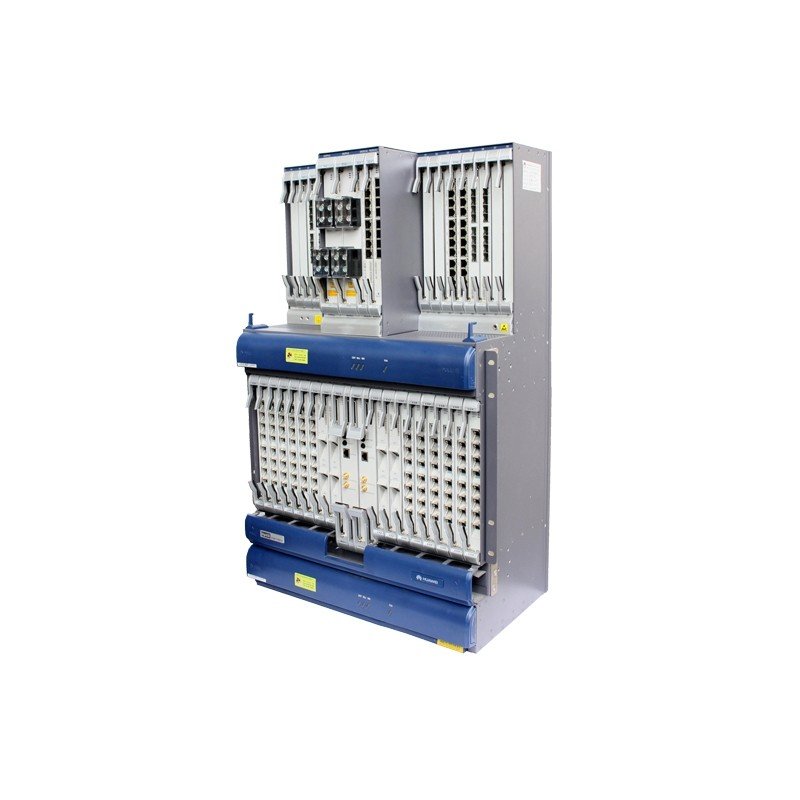
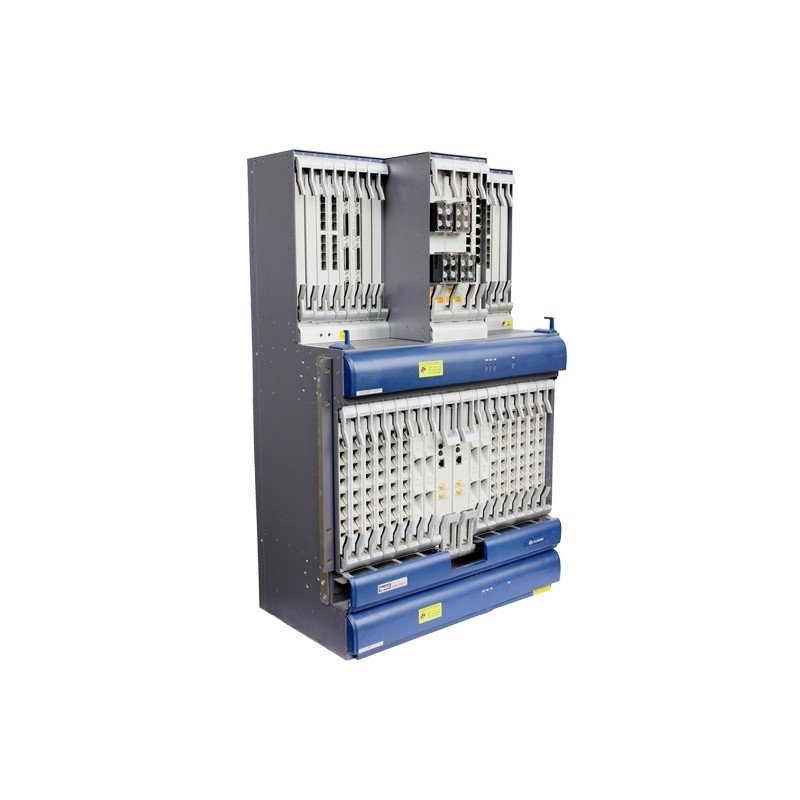
Huawei OptiX OSN 7500 II
| Model: | Huawei OptiX OSN 7500 II – Huawei OptiX OSN 7500 II |
| Detail: | Huawei OptiX OSN 7500 II, mainly used as a service scheduling node at the backbone layer of the MAN, located at the metropolitan backbone layer to schedule and transmit services of different types and granularities |
- Day and night customer service
Description
Huawei OptiX OSN 7500 II Specification | ||
| Dimensions | 800mm (H) x 496mm (W) x 295mm (D) | |
| Switch capacity | Packet: 320 Gbit/s and TDM: 360 Gbit/s (higher order), 40 Gbit/s (lower order), OTN: 560Gbit/s | |
| Service slots | 32 slots, 16 slots for interface boards and 16 slots for processing boards with same bandwidth per slot | |
| Supported interfaces | OTN interface | OTU-1, OTU-2/2e, OTU-3(40G, compliant with OTL3.4 standard) |
| Ethernet interface | FE/GE/10GE/40GE | |
| SDH interface | STM-1/4/16/64 | |
| PDH interface | E1/E3; T1/T3 | |
| ATM interface | E1, STM-1 | |
| WDM interface | 40 DWDM wavelengths, compliant with ITU-T G.694.1 8 CWDM wavelengths, compliant with ITU-T G.694.2 | |
| SAN interface | FDDI, ESCON, FICON/FICON Express, FC100/200/400/800/1200 | |
| PCM interface | FXS/FXO, 2/4W VF & E&MX.21/V.35/V.11/V.24/V.28, RS232/RS422, RS449/RS423A/RS422A, RS530/RS530A,RS485, G.703 64 kbit/s codirectional | |
| Other interface | DDN, Video | |
| Networking Mode
| Supports packet, hybrid (packet + SDH or OTN + SDH) or SDH networking Supporting WDM networking Supporting single-fiber bidirectional transmission | |
| Power Supply | -48V DC/-60V DC | |
| Operation Environment | Temperature
| Long term: -0ºC ~ 45ºC Short term: -5ºC ~ 55ºC |
| Relative Humidity | Long term: 5% ~ 85% Short term: 5% ~ 95% | |
| Ethernet Feature | E-Line and E-LAN, QinQ MPLS-TP based VPWS and VPLS Multi-section pseudo-wire (MS-PW) ETH PWE3, TDM PWE3, ATM/IMA PWE3 IGMP Snooping V2 Blacklist, Broadcast packet suppression, ACL VLAN SWAP | |
| PCM Feature | Voice or data Conference/Meeting,P2MP,MP2MP FXO/FXS mode can be set by software E&M Interface voltage can be set by software (-48V/-12V) E&M signaling can be set by software (Bell types I, II, III, IV, V and British Telecom SSDC5) | |
| QoS
| Hierarchical QoS scheduling and traffic shaping DiffServ mode based on traffic classification, eight priority queues Simple traffic classification, complex traffic classification, per hop behavior (PHB),and ACL Committed access rate (CAR), shaping based on port scheduling priority PQ scheduling priority, weighted fair queuing (WFQ) and PQ+WFQ queuing Tail drop and weighted random early detection (WRED) | |
| OAM | MPLS-TP OAM | LSP/PW OAM: CC, LB, LT AIS, RDI LM, DM LCK, TST CSF |
| MPLS OAM | LSP/PW OAM: FDI, BDI,CV, FFD, TraceRoute, Ping, LM, DM PW OAM: CES PW VCCV | |
| Ethernet OAM | ETH-CC, ETH-Loopback, ETH-Link Trace, Remote Loopback, Remote Fault Detection, RMON(RFC 2819) | |
| Protection | Equipment-level protection | Universal Cross-Connect, System Control and Clock Processing Board 1+1 backup and power 1+1 backup |
| MPLS-TP-based service protection | LSP/PW Linear protection, Ring protection Anti multifailure protection based on MS-PW LAG, MC-LAG, Dual-homing protection, LPT | |
| SDH based Service Protection | 2/4 fiber MS-SP Ring; 1+1/1:n (n<=14) Linear MSP SNCP/SNCTP Tributary protection for E1/T1, E3/T3, E4, STM-1(e) and FE | |
| ASON
| Distributed restorable rerouting protection 5-level service dedicated protection scheme based on different SLA: Diamond, Gold, Silver, Copper and Iron services Based on VC-4 and VC-12 granularity | |
| Synchronization | Both Ethernet and SDH networks supporting clock synchronization Supporting G.813, Synchronous Ethernet and IEEE 1588v2 synchronization Adaptive clock recovery (ACR) Two external clock inputs/outputs (2 MHz or 2 Mbit/s) Two external time signals (1pps+TOD) | |